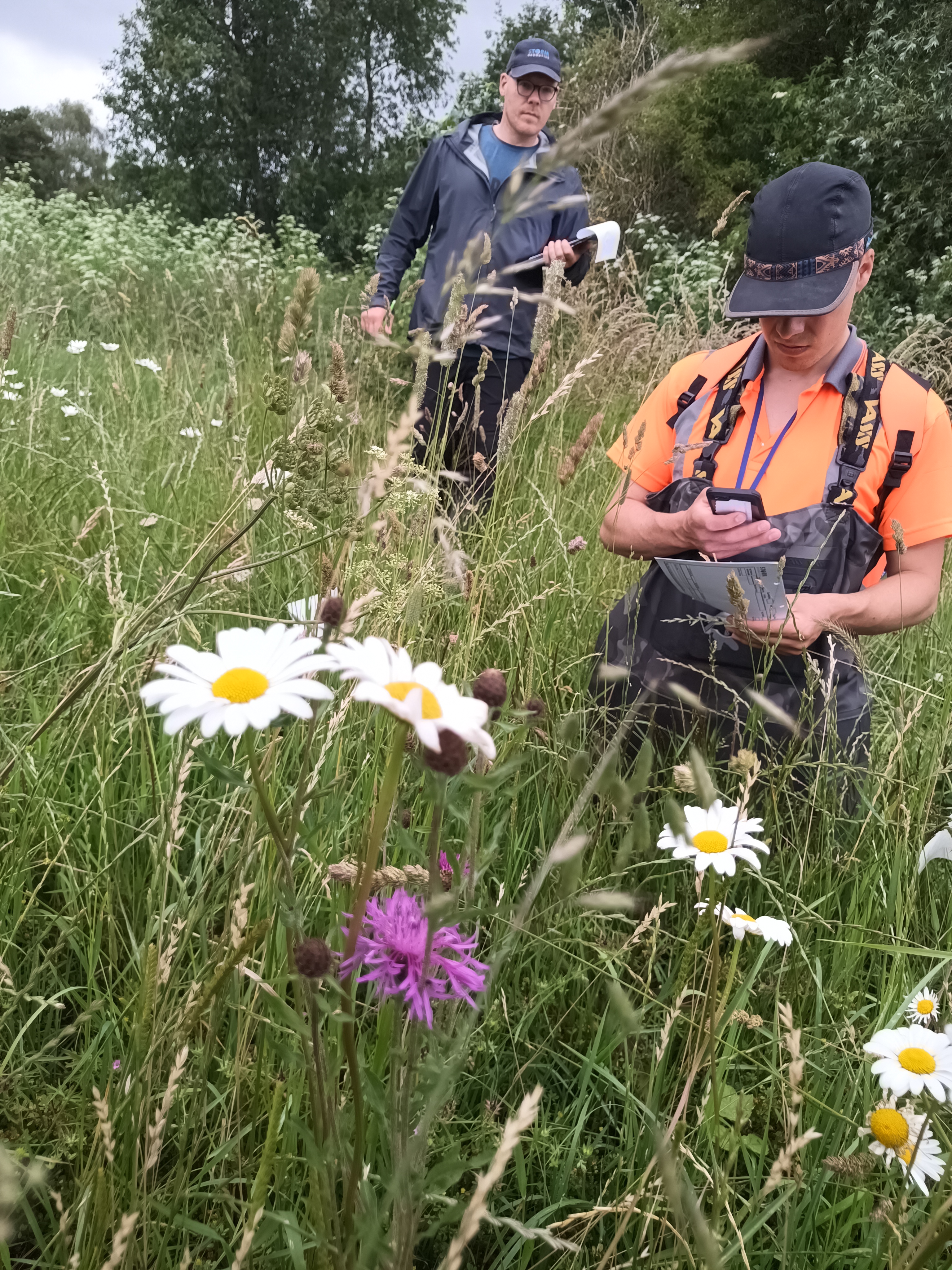
Two surveyors from sister company Storm Geomatics Limited went down to the meadow to monitor 13 quadrats across the meadow. This year an additional 4 quadrats were located so we had coverage across all six different seeding areas, although the seeds were broadly the same, our responsible body (Warwickshire County Council) suggested it would be useful to expand the quadrats to monitor how each area is getting on. Jake Beddard was very enthusiastic about the survey and he can be seen pictured here kneeling down recording the species. The most species rich quadrat had 22 different species, two of them undesirable though - the white clover and the green dock, I also don't like the Bristly Ox-tongue or the Spiny Sowthistle in the hay, so I will try and remove this before the hay cut in mid-August.. This is the list from that quadrat:
Timothy, Crested Dog's-tail, False Oat Grass, Queen Anne's Lace, Hogweed, Common Knapweed, Hop Trefoil, Dandelion, Smooth Meadow Grass, Meadow Barley , Orchard Grass, Perennial Ryegrass, Common Plantain, Green Dock, Creeping Bent, Hedge Bedstraw, Bristly Ox Tongue, White Clover , Cut Leaved Cranesbill, Spiny Sowthistle, Oxeye Daisy, Narrow Leaf Plantain
by Mike Hopkins
7Jun2026
Knapweed in numbers
In early June the knapweed started to flower. Last year we had very little, this year it is noticeably more abundant in many areas, even in places that were sown 18 months ago. I didn't know, but there are many different types of knapweed, some are non-native and invasive. From what I have seen of the knapweed at Halford Flood Meadow it is common knapweed which is native UK wildflower. Common knapweed is pictured and I managed to get it with a small skipper butterfly!
by Mike Hopkins
27May2026
Holiday job.
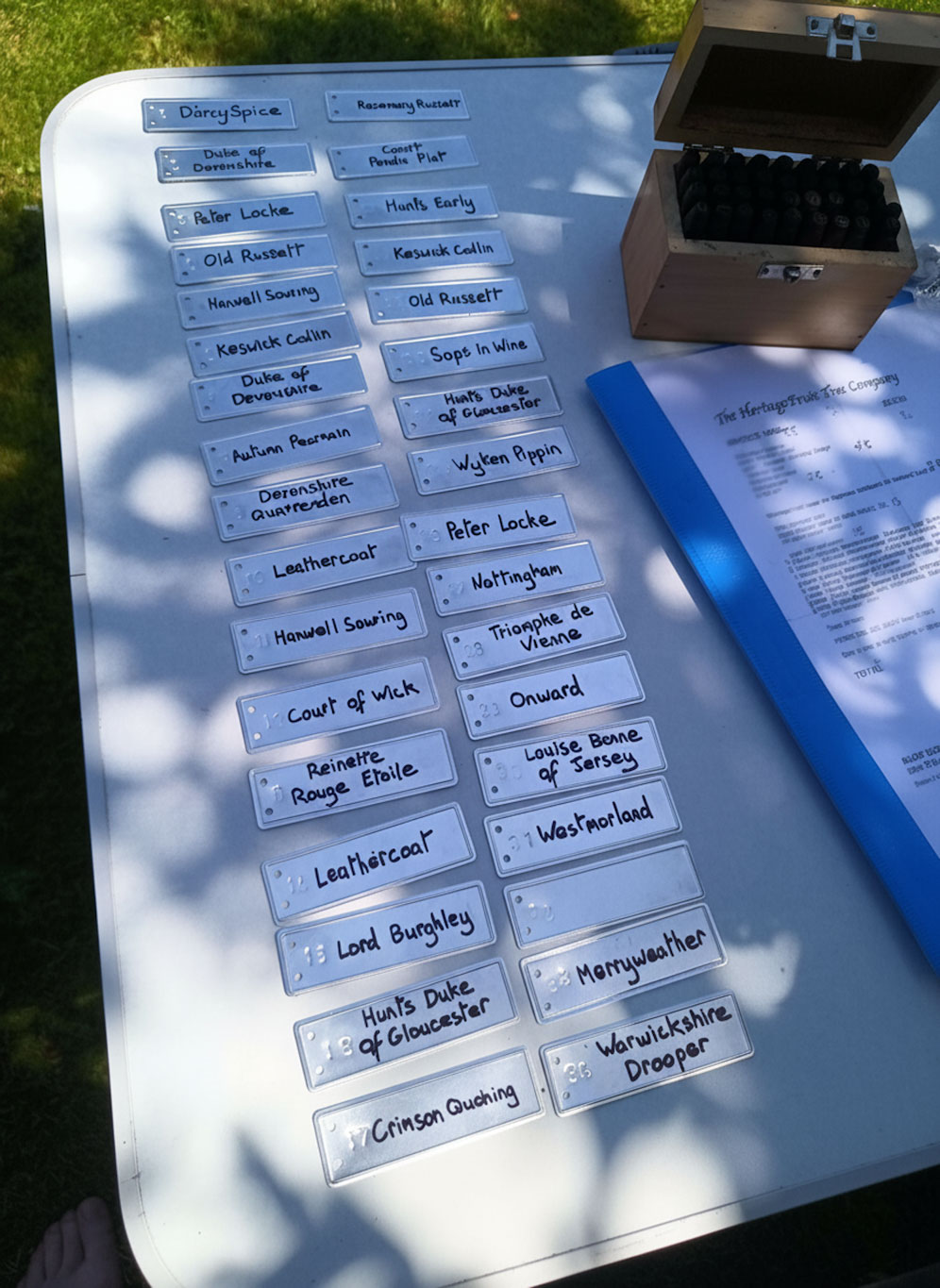
Some things just never get done, so this one I saved for my holiday, where I have more time! The labels on the heritage fruit trees were being chewed off by something - I think a muntjac, so I decided to go aluminium. The tags are stamped with a number which I intend to list out on this website to try and preserve their identity's for years to come. The tree species is also written on the tag, but I suspect this will wear off in time, but for now it is useful for identifying trees whilst walking around.
by Mike Hopkins
24May2026
So proud!
I did think when we set out that this would be a big challenge, and I wasn't wrong. It all becomes worth it when you start discovering what you and nature can do together. The meadow isn't perfect, but nature decides that and it looks like the meadow is developing into a mosaic of different habitats and plant communities. Some areas not very species rich at all and others have species in abundance. I am both pleased and proud with where we have got to so far, but it is a long journey and only another 29 years to go!
by Mike Hopkins
10May2026
Hard work is revealing itself.
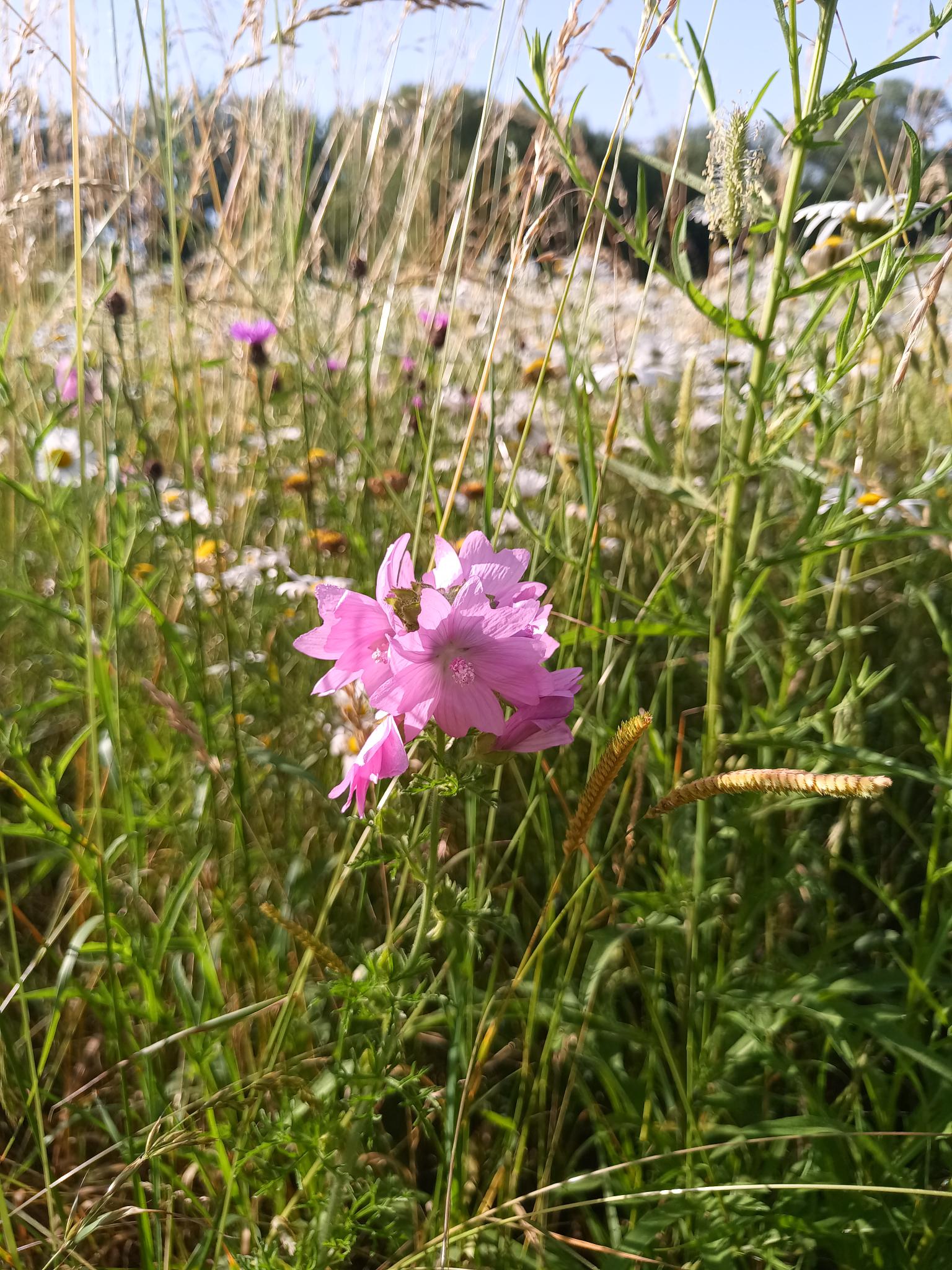
All the work in the meadow is starting to pay off. The seeding is completed which we have done in sections in different years in different seasons so we could work out what works and what doesn't. Our autumn 2023 sowing is now starting to show a little more maturity with a greater species richness coming through. Next month we will do our annual species count to monitor the progress. One plant that is popping up in a lot of places in the first sown area is the pictured Musk Mallow, it was seen in only a few places last year, but this year it seems to have found its home in a widespread area at the upstream end of the meadow. This wasn't part of the seed mix sown across the meadow, but was part of the seed mix used for the scrapes. I would be interested to know how this has dispersed!?!?
by Mike Hopkins
5Apr2026
Snakeshead Fritilliary
When we first abought the meadow I planted 100 SHF bulbs and planted them in groups of five in 20 locations in the meadow. Now it is like an Easter egg hunt going to look for them at the beginning of April! Out of the 100, we probably only have about 10 flowering this year in just three of the areas. I do like them and they give me anticipation for the forthcoming spring!
by Mike Hopkins
7Mar2026
Evidence of Romans
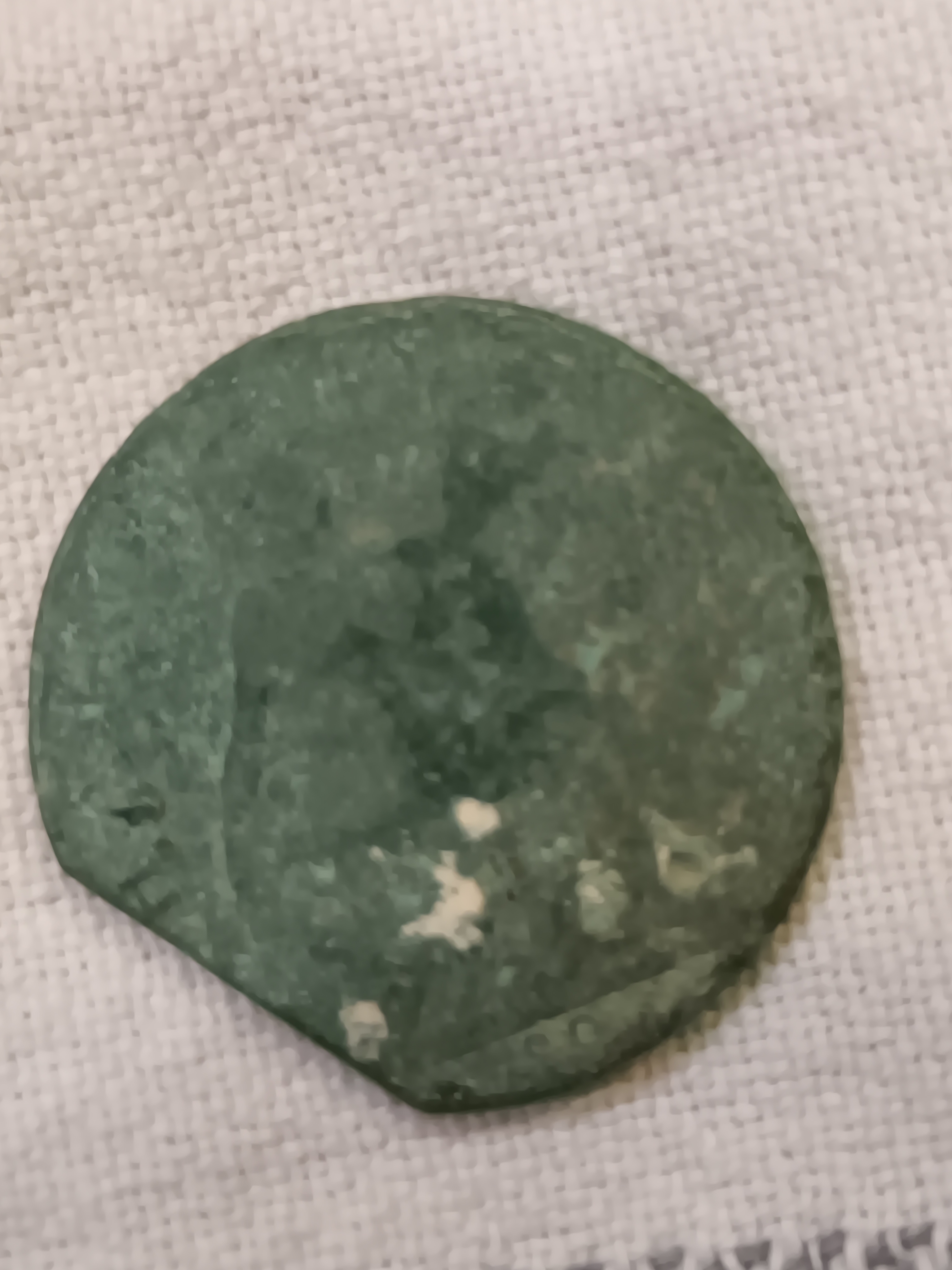
With Halford being on the Fosseway, it will come as no surprise that I found a Roman coin just 100mm sub surface in one of the meanders of the river. Other items found whilst metal detecting have been bullet heads of differing calibres, shotgun caps, a snuff box, horse shoes, bridle ring, odd metallic looking stones, bits of wire, nails, tractor parts, car parts, aluminium cans, milk bottle tops, fishing weights, musket balls, a lovely sixpence and quite a lot of junk! I think the river could be throwing new stuff up regularly as there are always more stones lying on the top of the flow path areas after a flood, so if it can move a stone it can move a coin!
by Mike Hopkins
10Feb2026
Understanding the river behaviour.
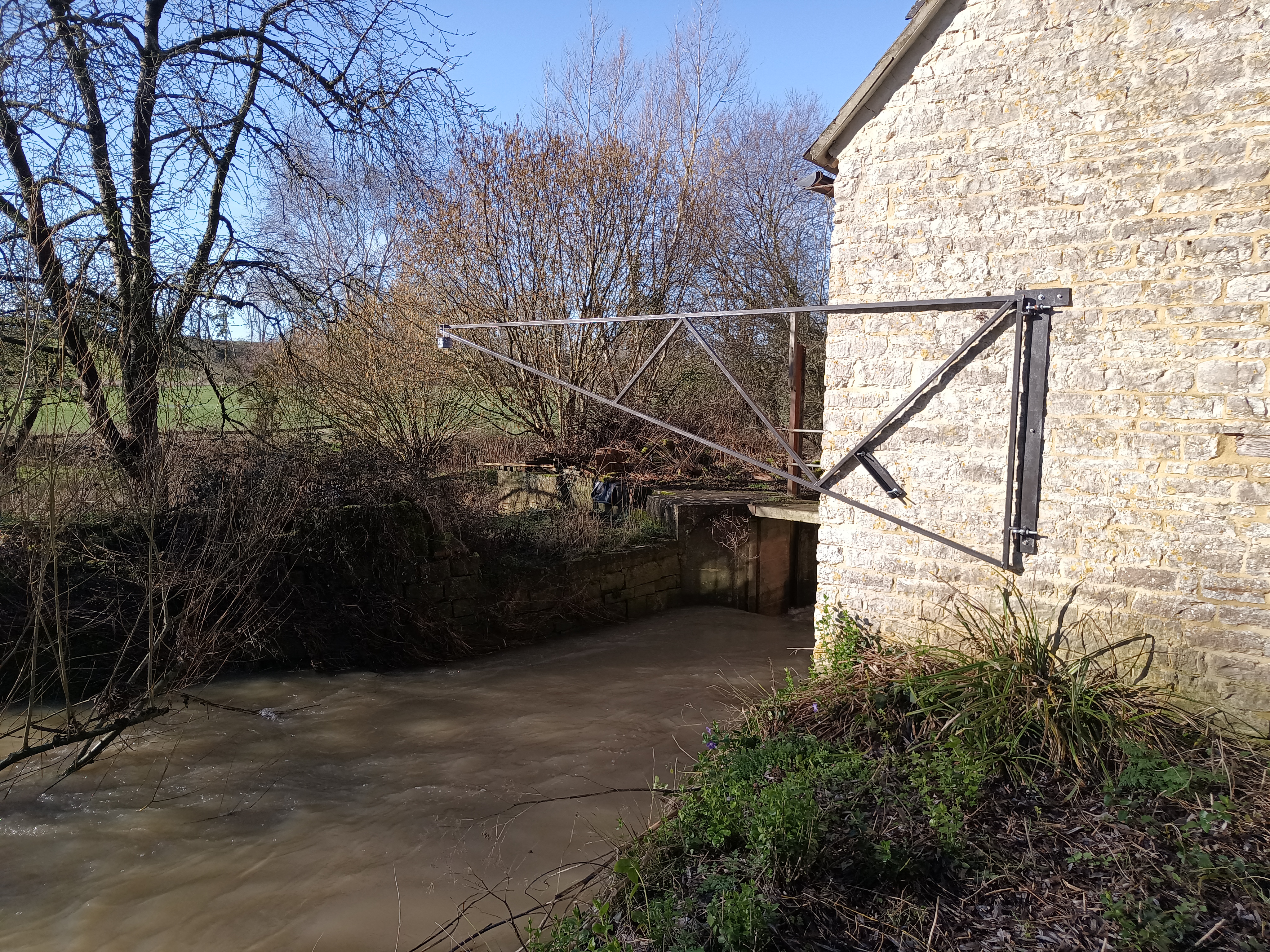
This is a picture of the water level monitor that we installed at The Mill at Halford, just upstream of the Mill Race. My neighbour lives in the Mill, Paul Lucas, and he crafted the steel frame and made it big enough to capture water levels in the centre of the river to keep an eye on low flows too. The water level sensors tell us exactly how many times it floods a year, and also how big the floods are i.e. which areas of the meadow gets inundated. It is very interesting looking at the correlation between rainfall and river levels, we are building models and training them up against the data to understand more about the different weather patterns and how they influence the meadow. The next thing to throw in the mix will be the species counts and see how this has evolved in the differing climatic conditions. Its a tough place to grow anything on the floodplain, so recording what we are doing will hopefully make us and others more successful in the future.
by Mike Hopkins
17Jan2026
Pruning the fruit trees
The biggest job in January is pruning the fruit trees. Andy Howard from the Heritage Fruit Tree Company taught me how to prune the trees, and at this stage I am trying to get them to 6ft, so trying to put all the energy into going skyward. I would say that about 50% of the trees have made it already, and that is where I have been pruning the leader to a good south facing bud. I am trying a different mulch this year which is a compost I made in some quantity from the arisings from the meadow scarification's (Autumn 2025), horse muck and wood chippings. Lets see how they go!
by Mike Hopkins
16Jan2026
More Floods
This is the fifth flood of the autumn/winter, the first being on 15th November 2025, so the floodplain has had its fair share of water in the wet season. We have been lucky that the floods started as late as November as the final sowing of the meadow was completed on 23rd September 2025, so with the aftermath grazing and that little bit of time I am hoping that the seed has lodged itself in the soil well enough to hold through these relentless winter floods.